The Department of Linguistic Modelling and Knowledge Processing appeared in 2015 after joining two departments of the Institute of Information and Communication Technologies: the Linguistic Modelling Department (LMD) and the Department of Technologies for Knowledge Management and Processing. Both Departments have long and distinguished history.
Computational Linguistics (CL) activities in Bulgaria have their origins in a period lasting a little more than a decade (1964-1976). A group “Machine Translation and Mathematical Linguistics” existed then at the Institute of Mathematics of the Bulgarian Academy of Sciences with a research program devoted to the problems of machine translation (MT) and to quantitative and statistical studies of Bulgarian language. Lead by Prof. Alexander Ljudskanov – an energetic pioneer of computer applications to language – the group made some important first steps in Russian-Bulgarian automatic translation and its achievements marked the beginning of a professional approach to the field. (This is the Bulgarian MT group mentioned by John Hutchins as “a research group established in mid-1960s”). The Linguistic Modelling Department (LMD) was a direct descendant of Ljudskanov’s group as his co-workers were LMD staff members for many years.
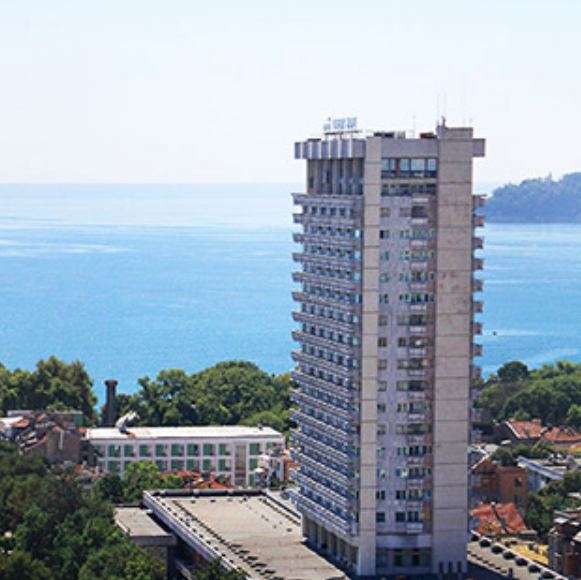
LMD was one of the very few CL centres in Eastern Europe, whose kernel was preserved after 1990 as one administrative and scientific unit. LMD staff members successfully switched from the older Eastern academic style to collaboration on project basis with major European research institutions. While in the 80-ties of the last century the main LMD tasks were oriented to computational modelling of Bulgarian language, in the 90-ties LMD participated actively in international projects, funded by different European institutions. Today the group is active in a number of advanced CL fields including both development of linguistic resources and implementation of software applications. After 2001, the Department is the local organiser of the events Recent Advances in Natural Language Processing (RANLP).
The Department of Technologies for Knowledge Management and Processing was the Bulgarian pioneer in Artificial Intelligence in the 80-ties of the last century. Its members developed intelligent robots, expert systems and knowledge-based systems, a Bulgarian version of Prolog, and various prototypes of intelligent applications. The team has also long-term interests in the technological development of knowledge-based systems, machine learning and case-based reasoning methods and tools, distributed multimedia environments for education, methods and tools for representing and processing domain specific semantic information as well as novel architectures for semantically-enabled Web service oriented applications. The Department was the main organiser of AIMSA conference series since 1984. The International Conference AIMSA (Artificial Intelligence: Methodology, Systems, Applications) is a biennial forum for the presentation of AI research and development which is held in Bulgaria in September. AIMSA Proceedings are published by Springer in the Lecture Notes of Artificial Intelligence series.
 Recent Advances in Natural Language Processing